
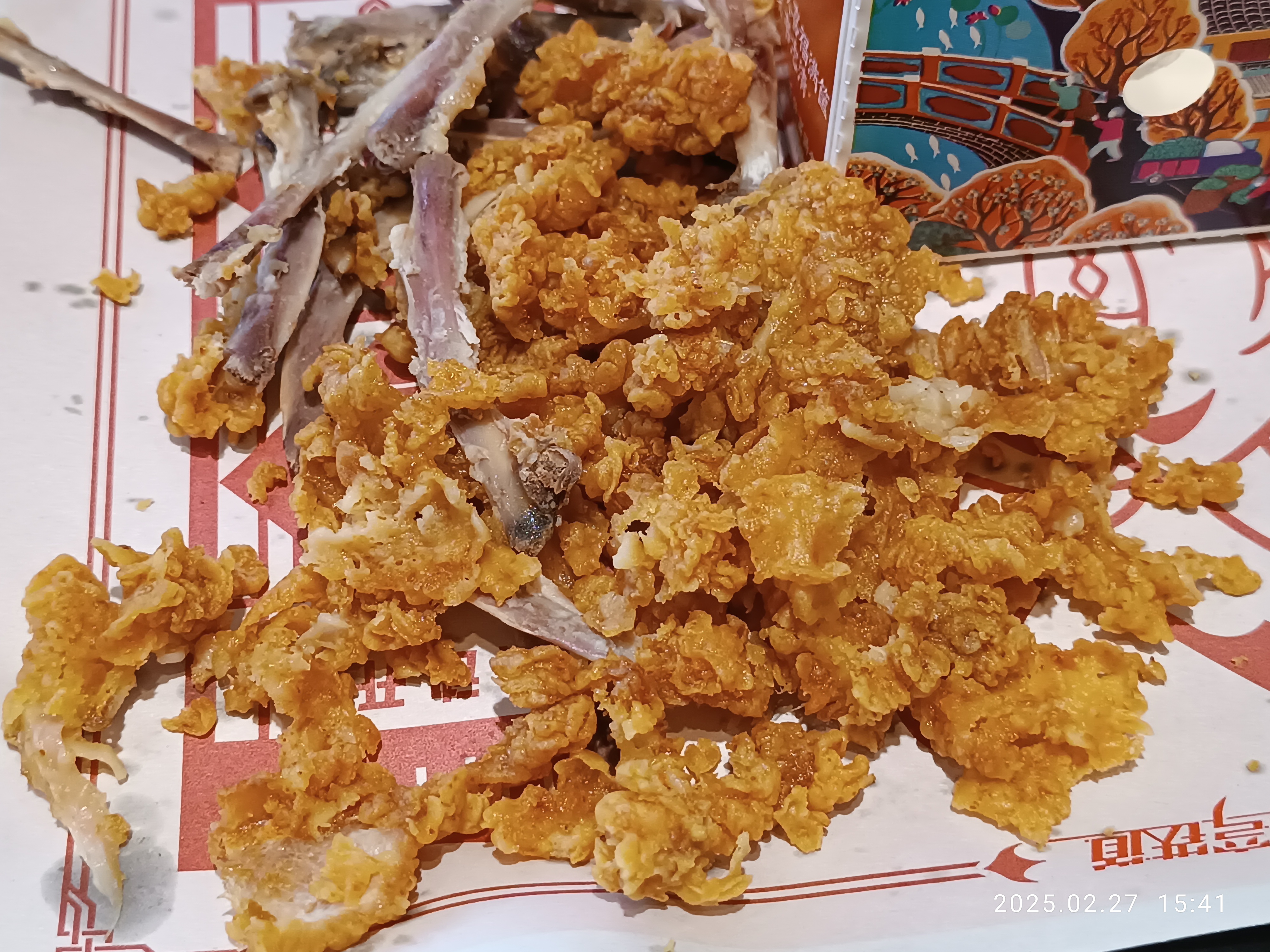
The average restaurant wastes 4-10% of its food purchases. On $400,000 in annual food purchases, that's $16,000-$40,000 in the trash. The median full-service restaurant profit margin is 2.8%, according to the National Restaurant Association's 2026 data. If you're wasting 8% of your food, you're throwing away nearly 3 times your entire profit.
I did a waste audit for a restaurant in Portland. We put a scale next to the trash can and weighed everything for 7 days. 340 pounds of food. $2,100 worth. Extrapolate that: $109,200 a year. Their annual profit was $42,000. They were throwing away 2.6 times their profit.
The owner cried. Not exaggerating. She sat down on a milk crate in the walk-in and cried. She'd been working 6 days a week for 3 years and had less money in her bank account than the value of the food her staff threw away in a week.
Fix your waste and you fix your bottom line.
Industry Data & Sources:
The National Restaurant Association's 2026 State of the Industry report provides benchmark data on restaurant costs and profitability.
RestaurantOwner.com surveys show that top-performing restaurants maintain prime costs between 55-60%.
Where the Waste Actually Comes From
Spoilage (40-50% of waste)
Food that goes bad before you can use it. Over-ordering is the main cause. You buy a case of avocados because it's cheaper per unit. You use half before they go bad. The savings on the case price disappear into the trash.
Order based on your sales forecast, not your gut. If you sell 30 avocado dishes per week and each uses half an avocado, you need 15 avocados per week. Buy 18 to account for waste. Don't buy a case of 48 because it's $0.20 cheaper per avocado. You'll throw away 30 avocados and lose $30 instead of saving $3.
I had a chef once who ordered by the case for everything. "It's cheaper." He'd point to the invoice and show me the per-unit savings. What he never calculated was the 40% spoilage rate on his overstocked walk-in. I started making him do a walk-in audit every Friday. Count everything. Write down what's about to go bad. Plan the weekend specials around it. Spoilage dropped from 6% to 2% in 6 weeks. The "savings" from case pricing were costing us $1,800 a week.
Prep Waste (20-30% of waste)
Trimmings, peels, and off-cuts from prep. Carrot tops, onion skins, meat trim, fish bones. Some of this is unavoidable. Much of it isn't.
The Portland restaurant I mentioned? Their chef started making stock from vegetable trim and bone scrap. It cost them nothing but labor. They put "house-made stock" on the menu and sold it for $8 a quart. They sold 40 quarts a week. That's $320 a week, $16,640 a year. From garbage.
But here's what nobody tells you about trim-to-revenue programs: they require a chef who cares. I've tried this at 4 restaurants. It worked at 2. The other 2? The chefs nodded in the meeting and then never did it. One told me "I didn't become a chef to make stock from garbage." He's not wrong. It's not glamorous. If your chef isn't into it, don't force it. Find another way.
Plate Waste (15-25% of waste)
Food that leaves the kitchen but doesn't get eaten. Over-portioning is the main cause. Your 8-ounce burger is actually 10 ounces because your cook doesn't weigh portions. Your side of fries is 50% larger than spec because "customers like it."
Portion everything. Scales, scoops, and spoodles. A #8 scoop is 4 ounces every time. A scale is exact. Train your cooks to portion and audit them weekly. An extra 2 ounces of protein on every plate at $6 per pound costs you $0.75 per plate. At 200 covers per day, that's $150 per day or $54,750 per year.
I caught a line cook over-portioning fries once. He wasn't being lazy. He genuinely thought he was doing the right thing. "Customers love our fries. I want them to get their money's worth." Admirable instinct. Terrible for the P&L. We were giving away $80 a day in extra fries. I showed him the math. He got it. Started using the portion scoop. Customers didn't notice. Nobody complained about "smaller" fries because they were still getting a full portion. They'd just been getting 1.5 portions before.
Theft and Error (5-10% of waste)
Staff meals that aren't rung in. Food that walks out the back door. Orders that are made wrong and remade. A cook who "messes up" a steak at the end of their shift and takes it home.
Ring in all staff meals. Even if they're free, they need to be tracked. A free staff meal that's not tracked is invisible waste. Track it and you'll see that your "occasional" staff meals are costing you $200-$400 per week.
The "messed up" steak trick is the oldest one in the book. Cook fires a steak 10 minutes before close. "Oops, I made an extra." Takes it home. If this happens more than once a month, it's not an accident. I don't make a big deal about it. I just start requiring manager approval for any remakes in the last 30 minutes. The "accidents" stop immediately. Funny how that works.
How to Track Waste
Recommended Tool
Track your inventory in real-time and reduce food waste with MarketMan.
Used by 2,400+ restaurants to optimize their purchasing.
Start with a waste log. Every time something gets thrown out, write down what it was, how much, why, and who threw it out. Do this for one week. You'll find patterns immediately.
Use categories: spoilage, prep waste, plate waste, error, theft. Assign a dollar value to each entry. At the end of the week, total each category. Your biggest category is your biggest opportunity.
A waste log takes 30 seconds per entry. If you have 20 waste events per day, that's 10 minutes of staff time. The insights are worth thousands.
The pushback you'll get: "I don't have time to write down everything I throw away." The response: "You have time to throw away $109,000 a year but not 10 minutes a day to stop it?" That usually ends the conversation.
📬 Get More Customers. Get More Profit.
Join 2,400+ restaurant owners getting actionable tips every Friday. One email. One insight. No spam.
Specific Fixes for Common Waste Problems
Over-Portioning Protein
Your 6-ounce chicken breast spec is actually 7-8 ounces because your prep cook doesn't weigh them. At $3 per pound, that extra 1.5 ounces costs $0.28 per plate. At 100 chicken dishes per day, that's $28 per day or $10,220 per year.
Weigh every protein portion during prep. Use a scale, not your eyes. Audit weekly. If a cook consistently over-portions, retrain them. If they still over-portion, they're doing it on purpose.
Over-Prepping
Your prep list says "make 4 quarts of tomato sauce." You sell 3 quarts per day. The fourth quart gets thrown out at the end of its 3-day shelf life. That's 25% waste on tomato sauce.
Base your prep list on actual sales, not a template. If you sold 3 quarts of tomato sauce every day this week, prep 3 quarts plus 10% buffer. Not 4 quarts because "that's what we always make."
I'm guilty of this one myself. Had a prep list I'd been using for 2 years. Never updated it. Our sales mix had shifted but the prep list hadn't. We were over-prepping 3 items and under-prepping 2 others. The over-prepped items went in the trash. The under-prepped items meant 86'd dishes and angry customers. Took me 2 years to notice. Don't be me.
Produce Going Bad
You receive produce twice a week. By day 3, your lettuce is wilting and your herbs are brown. You're throwing out 20% of your produce before it hits a plate.
Order produce more frequently or buy hardier varieties. Romaine lasts longer than spring mix. Kale lasts longer than spinach. If you can't get more frequent deliveries, adjust your menu to use produce in order of perishability. Delicate greens on day 1-2. Hearty greens on day 3-4. Root vegetables on day 5-6.
Bread Waste
You put bread on every table. 40% of it comes back uneaten. You can't reuse it. It goes in the trash.
Offer bread instead of automatically serving it. "Would you like bread for the table?" Half your customers will say no. You'll cut bread waste by 50% and bread cost by 50%. On $200 per week in bread cost, that's $5,200 per year.
Turn Waste Into Revenue
Sell your trim. A 200-seat restaurant produces 50-100 pounds of food waste per day. Some of that can become revenue.
Vegetable trim becomes stock. Day-old bread becomes bread pudding or croutons. A $5 bread pudding made from waste bread has a food cost of under 10%.
Fruit that's too ripe for service becomes jam, compote, or cocktail syrup. Your bar can use it. Your brunch menu can feature it.
Partner with a local farm or composting service. Some cities require it. Even if yours doesn't, a composting service costs $200-$400 per month. It's cheaper than landfill fees and better for your brand.
The Numbers That Matter
Track your waste percentage weekly. Waste cost divided by food purchases. Target: under 3%. If you're at 8%, you have $20,000-$32,000 in annual savings available on $400,000 in purchases.
Track waste by category. If spoilage is 50% of your waste, fix your ordering. If plate waste is 30%, fix your portioning. If prep waste is 40%, fix your prep procedures.
Track waste by item. Your top 5 wasted items probably account for 60% of your waste dollars. Fix those 5 items first.
The Portland owner I mentioned? A year after the waste audit, her waste was at 2.8%. Her profit went from $42,000 to $89,000. Same revenue. Same menu. Same staff. She just stopped throwing money in the trash.
Read our inventory management guide for the weekly system that catches waste before it happens.
Related: Food Cost Percentage · Restaurant Profit Margin · Menu Engineering
Recommended Tool
Streamline your inventory management with MarketMan.
Get real-time tracking, automated ordering, and waste reduction.