
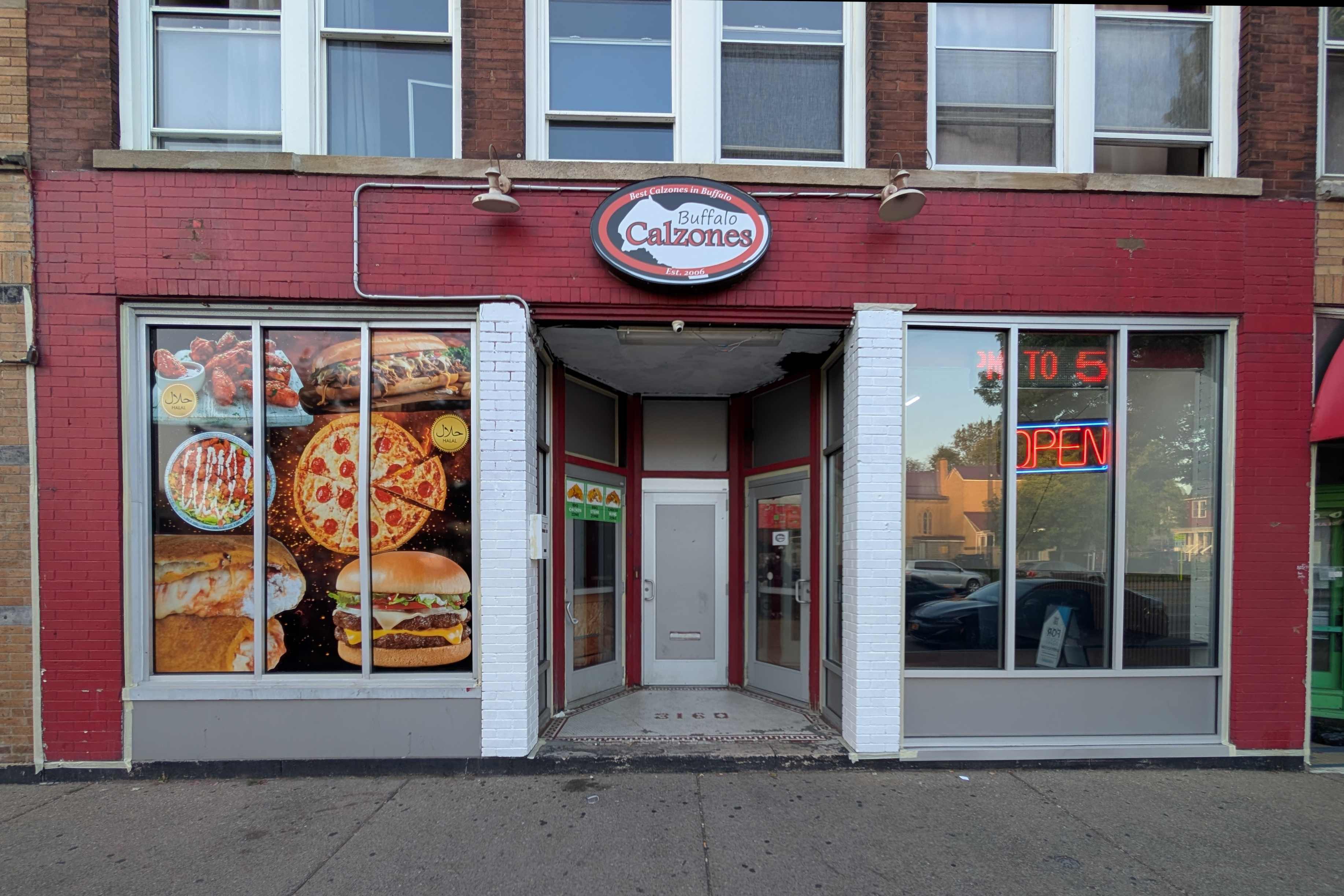
There's a space on South Congress in Austin that's been 4 different restaurants in 6 years. Once you've picked your spot, see our guides on lease negotiation and restaurant concept development to build the right business for your space. A taco place. A sushi bar. A burger joint. A vegan cafe. All failed. The location is incredible. 15,000 cars a day drive past it. The rent is reasonable at $7,200 a month for 1,800 square feet. So why does every restaurant there die?
Parking. There are 4 spots. Four. For an 80-seat restaurant. Every owner thought they could overcome it with great food and Instagram marketing. They couldn't.
55% of diners pick where to eat based on location. That means your food can be incredible and your service flawless, but if people can't find you or don't want to drive there, you'll fail. I've watched restaurants with mediocre food thrive in great locations and restaurants with amazing chefs close in bad ones. The location picks you, not the other way around.
Industry Data & Sources:
Bureau of Labor Statistics data shows the restaurant industry employs over 12.5 million people with annual turnover rates around 75%.
The National Restaurant Association provides operational benchmarks and best practices for restaurant management.
The Numbers That Matter
Your rent should be 6-10% of projected revenue. If you're projecting $800,000 in annual revenue, your monthly rent needs to be between $4,000 and $6,667. Go above 10% and you're working for your landlord.
I've seen restaurants paying 15-18% of revenue in rent. They don't last. There was a French bistro in Chicago paying $14,000 a month on $900,000 in annual revenue. That's 18.7%. The owner was essentially running a charity for his landlord. He closed in month 14.
Restaurant spaces cost $159 per square foot to lease and $178 per square foot to buy, on average. A 1,500 square foot space at $159 per square foot means $19,875 per month in rent. At 8% of revenue, you need to generate $248,437 per month or roughly $3 million per year. That's a lot of covers. If those numbers don't work, the space doesn't work. Doesn't matter how pretty it is.
Total build-out costs average $100-800 per square foot with a median of $450. A 1,500 square foot space at the median means $675,000 just for construction. If the space was previously a restaurant, you might get away with $100-200 per square foot. If it was a retail store, budget the full $450. I've seen a clothing boutique conversion cost $600 per square foot because the plumbing had to be completely redone. The landlord swore it would be "simple." It wasn't.
How to Count Foot Traffic (Do It Yourself)
Recommended Tool
Find the right POS for your restaurant. Compare costs and features.
Use our ROI calculator to match your needs with the best system.
Landlords will tell you a space gets "great foot traffic." Don't believe them. I've never seen a landlord's traffic estimate that wasn't inflated by at least 30%. Sometimes it's intentional. Sometimes they're just counting cars on the street and calling it foot traffic.
Stand outside at 8am, noon, 5pm, and 8pm. Do this on a Tuesday and a Saturday. Count pedestrians for 30 minutes each session. Multiply by 2 to get hourly traffic. If you're seeing fewer than 200 people per hour during peak times, walk-in business will be tough.
For a quick-service restaurant, you want 300-500 pedestrians per hour during lunch. For full-service dinner, 150-300 during evening hours is workable if you have parking. For a destination restaurant where people make reservations weeks in advance, foot traffic matters less. But you better have a chef with a name and a PR budget. I'm talking minimum $3,000 a month in PR and marketing for the first year.
Count cars too. How many parking spaces are within a 2-minute walk? You need at least 1 space per 3 seats. If you have 60 seats, you need 20 parking spots nearby. Valet parking costs $2,000-$4,000 per month. Build that into your budget if parking is tight.
Demographics: Who Lives and Works Here
Pull census data for a 1-mile, 3-mile, and 5-mile radius around your location. You're looking for household income, age distribution, and population density.
A $45 average ticket restaurant needs households earning $75,000+ within 3 miles. A $12 average ticket concept can work with $45,000+ households. I had a client in Denver who ignored this. $32 average ticket, $45,000 median household income. Great food. Closed in 14 months. The math just didn't work.
📬 Get More Customers. Get More Profit.
Join 2,400+ restaurant owners getting actionable tips every Friday. One email. One insight. No spam.
Daytime population matters as much as residential. If you're surrounded by office buildings, your lunch business will be strong but dinner might be dead. If you're in a residential neighborhood, the opposite. The ideal location has both: offices within walking distance and homes within a 5-minute drive.
Check the competition. Being near other restaurants can help. Restaurant clusters attract diners who want options. But there's a limit. Markets with more than 35 restaurants per 10,000 residents see failure rates 2.3x higher than less saturated markets. Count how many restaurants are within a half-mile. If there are 20 and your population within 3 miles is 30,000, you're at 67 restaurants per 10,000 residents. That's saturated. You're not competing with all 20, but you're competing for the same parking spots, the same attention, the same dollars.
Red Flags That Should Kill the Deal
A space that's been 3 different restaurants in 5 years is cursed. It might not be the location. It might be the landlord, the parking, or the layout. But something is wrong. Find out what before you sign.
I always call the previous tenants. Not the most recent one. The one before that. They're usually more honest because they've had time to process what went wrong. One guy told me the landlord refused to fix the HVAC for 8 months. In Phoenix. In summer. The restaurant hit 87 degrees during dinner service. Customers walked out. The landlord's response was "restaurants are supposed to be hot."
Check the previous tenant's sales if you can. Ask neighboring businesses how busy it was. If the last restaurant did $600,000 in revenue and failed, you need to understand why before you assume you'll do better.
No grease trap or inadequate ventilation is a $50,000+ problem. Get a contractor to quote the mechanical systems before you sign the lease. If the space needs a new hood, new electrical panel, and a grease trap, that's $50,000-$100,000 you didn't budget for. I've never seen these come in under estimate. Always over.
A landlord who won't give you a tenant improvement allowance is a red flag. Standard TIA is $20-50 per square foot. On a 1,500 square foot space, that's $30,000-$75,000 toward your build-out. If the landlord offers zero, they either don't want a restaurant or they're difficult to work with. Either way, walk.
Lease Terms That Protect You
Get a 5-year lease with two 5-year options. A 3-year lease isn't enough time to recoup your build-out investment. Your rent should have fixed annual increases of 2-3%, not market rate resets. A market rate reset in year 5 could double your rent. I've seen it happen. Restaurant was doing $1.2M, profitable, and then the rent went from $6,500 to $12,000. They couldn't make the math work anymore.
Negotiate an exclusivity clause. If you're opening a pizza restaurant, your lease should prevent the landlord from renting to another pizza concept in the same center. Without this, you could spend $300,000 building out your space and then watch a national pizza chain open two doors down. This actually happened to a client in Atlanta. Domino's moved in 3 doors down. His sales dropped 22% in 6 months.
Get the right to assign your lease. If you want to sell your restaurant in 5 years, the buyer needs to be able to take over your lease. Without assignment rights, your restaurant is worth whatever your equipment is worth, not what your business is worth.
Read our guide on how to open a restaurant for the full timeline from concept to opening day.
The South Congress space in Austin? It's still empty. The landlord finally added 12 parking spots by buying the lot next door. Rent went up to $9,800. Someone will take it. Maybe they'll make it work. But they'll pay $118,000 a year for the privilege of finding out.
Don't be that person. Do the math before you fall in love with a space. The best location isn't the prettiest one. It's the one where the numbers work.
Found your location? The next step is negotiating your lease. Read our Restaurant Lease Negotiation Guide for 15 terms that will make or break your restaurant.
Recommended Tool
Not sure which POS to choose?
Our comparison tools help you pick the right system for your concept and budget.