
A cafe owner in Austin switched from a Toddy system to a BUNN Nitron in March 2025. Her cold brew sales were 38 drinks a day at $5.50 each. The Toddy produced 2.5 gallons per batch with a 16-hour steep time. She was brewing every day, sometimes twice on weekends. The labor was 45 minutes per batch including setup, cleanup, and filtering. At $16/hour for her barista, that's $12 in labor per batch. Two batches a day on weekends: $24 in labor for 5 gallons of concentrate.
The BUNN Nitron produces 5 gallons in 8 hours with push-button operation. Labor dropped to 15 minutes per batch. At $16/hour, that's $4 in labor. She saved $20 a day on weekend labor alone. Over a year, $1,040 in labor savings. The BUNN cost $3,200. The Toddy cost $120. The BUNN paid for itself in labor savings in 37 months. But the real win was capacity: she could now produce 10 gallons a day instead of 5. She added cold brew on tap, raised the price to $6, and cold brew went from 12% of beverage sales to 19%.
Cold brew is the highest-margin drink in your cafe. A 12-ounce cold brew costs $0.38 in coffee, $0.12 in cup and lid, and $0.04 in ice. Total cost: $0.54. Sell it for $5.50 and your margin is 90%. The equipment you use to make it determines how much of that margin you keep after labor.
The Four Types of Cold Brew Systems
Immersion buckets (Toddy, Brewista). Ground coffee sits in a bucket of cold water for 12-24 hours. You drain it through a filter. This is how cold brew has been made for decades. It's cheap, simple, and produces excellent flavor. It's also messy, labor-intensive, and inconsistent if different people brew it.
Automatic drip towers (BUNN Nitron, Wilbur Curtis). Water drips through a bed of coffee grounds over 4-8 hours. The machine controls flow rate and water temperature. The result is more consistent than immersion and faster. The machines cost $2,500-$5,000.
Keg systems (Cold Brew Avenue, home-built). You brew concentrate in bulk, keg it, and serve it on a nitro tap. The keg system is the serving method, not the brewing method. You still need a brewing system upstream. But the keg and nitro setup adds $800-$1,500 to your equipment cost and $0.15-$0.25 per serving for nitrogen.
Ready-to-drink concentrate (Stumptown, Chameleon). You buy cold brew concentrate in 64-ounce cartons or 5-gallon bag-in-box. No brewing. No equipment. Just open and serve. The cost is $0.45-$0.65 per 12-ounce serving versus $0.38 for house-made. The margin is still 85-88%. The labor is zero.
| Toddy | Brewista | BUNN Nitron | Ready-to-Drink | |
|---|---|---|---|---|
| Equipment Cost | $80-$150 | $200-$400 | $2,800-$3,500 | $0 |
| Batch Size | 2.5 gal | 3 gal | 5 gal | Unlimited |
| Brew Time | 16-24 hours | 12-18 hours | 4-8 hours | 0 |
| Labor per Batch | 45 min | 35 min | 15 min | 2 min |
| Yield (per lb coffee) | 0.9 gal concentrate | 1.0 gal concentrate | 1.1 gal concentrate | N/A |
| Cost per 12oz Serving | $0.38 | $0.36 | $0.34 | $0.45-$0.65 |
| Consistency | Variable | Good | Excellent | Perfect |
| Best For | Low-volume cafes | Mid-volume cafes | High-volume cafes | Any volume |
Toddy: The Standard for a Reason
Recommended Tool
Shop the largest selection of restaurant equipment at WebstaurantStore.
Free shipping on orders over $99 and price match guarantee.
The Toddy system is a plastic bucket with a felt filter pad. It costs $80-$150. It makes 2.5 gallons of concentrate from 5 pounds of coffee. It's been the industry standard for 30 years because it works and it's cheap.
The Toddy produces excellent cold brew when used correctly. The key variables are grind size (coarse, like breadcrumbs), steep time (16-20 hours at room temperature), and coffee-to-water ratio (1 pound per 2.2 quarts of water). Get these right and the Toddy makes cold brew as good as any $3,000 machine.
The problem is consistency. Different baristas use different grind sizes. Different steep times. Different water temperatures. The Toddy has no controls. It's a bucket. The quality depends entirely on the person making it. If your best barista makes the cold brew, it's great. If your new hire makes it, it's different. Customers notice.
The other problem is filtering. The Toddy uses a felt pad that needs to be rinsed, sanitized, and air-dried between batches. If it's not completely dry, it develops a musty smell that transfers to the coffee. I've tasted cold brew that tasted like a damp basement because the felt pad wasn't dried properly. Replace the felt pad every 3 months. They cost $8 for a pack of 2.
Brewista: The Toddy Upgrade
The Brewista Cold Pro system is a stainless steel immersion brewer that costs $200-$400. It makes 3 gallons of concentrate from 6 pounds of coffee. The stainless steel construction is easier to clean than the Toddy's plastic. The dual-filter system (metal mesh plus paper) produces cleaner cold brew with less sediment.
The Brewista's real advantage is the spigot. The Toddy requires you to pull a plug and let the concentrate drain into a pitcher. The Brewista has a spigot at the bottom that you open to dispense. It's a small thing. It saves 5 minutes of cleanup per batch. Over 300 batches a year, that's 25 hours. At $16/hour, $400 in labor savings. The Brewista pays for its price premium over the Toddy in labor alone.
The Brewista still has the consistency problem. It's a bucket with a spigot. The quality depends on the barista. But the dual-filter system is more forgiving than the Toddy's felt pad. If the grind is slightly too fine, the Brewista's paper filter catches the fines. The Toddy's felt pad lets them through, resulting in muddy cold brew.
BUNN Nitron: The Automatic Solution
The BUNN Nitron is a countertop automatic cold brew machine. You load 5-8 pounds of coffee into the brew basket, fill the water tank, and press a button. The machine drips water through the coffee at a controlled rate and temperature for 4-8 hours. The result is consistent every time regardless of who presses the button.
The Nitron produces 5 gallons of concentrate per batch. At a 1:1 dilution ratio (equal parts concentrate and water/milk), that's 10 gallons of ready-to-drink cold brew. At 12 ounces per serving, that's 106 servings per batch. For a cafe selling 40 cold brews a day, one batch lasts 2.6 days.
The labor savings are significant. A Toddy batch takes 45 minutes of hands-on time. The Nitron takes 15 minutes. Over 150 batches a year, that's 75 hours saved. At $16/hour, $1,200 in labor savings. The Nitron costs $3,200. The labor savings alone pay for it in 32 months. Add the consistency improvement and the capacity increase, and the payback is closer to 18-24 months.
The downside: the Nitron is 18 inches wide, 24 inches deep, and 28 inches tall. It needs dedicated counter space and a water line connection. It's not a bucket you can stash under the counter. It's a piece of equipment that demands real estate. In a 600-square-foot cafe, that's a meaningful commitment.
Ready-to-Drink: The Labor-Free Option
Buying cold brew concentrate from Stumptown, Chameleon, or a local roaster eliminates all brewing labor. You open a carton, pour it into a pitcher, and serve. The cost per serving is $0.45-$0.65 versus $0.34-$0.38 for house-made. On 40 servings a day, that's $4.40-$12.40 more per day in COGS. Over a year, $1,606-$4,526.
Compare that to the labor cost of house-made. A Toddy at 45 minutes per batch, 150 batches a year, at $16/hour: $1,800 in labor. A Nitron at 15 minutes per batch: $600 in labor. Plus equipment amortization: $30/year for a Toddy, $320/year for a Nitron (10-year life).
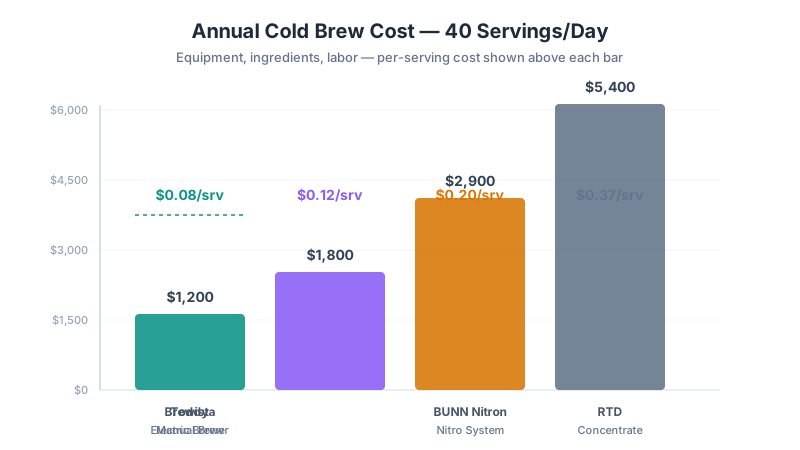
Total annual cost for 40 servings a day:
| Toddy | Brewista | BUNN Nitron | Ready-to-Drink | |
|---|---|---|---|---|
| Coffee COGS | $5,548 | $5,256 | $4,964 | $0 |
| Concentrate COGS | $0 | $0 | $0 | $7,300 |
| Labor | $1,800 | $1,400 | $600 | $100 |
| Equipment Amort. | $30 | $80 | $320 | $0 |
| Total Annual Cost | $7,378 | $6,736 | $5,884 | $7,400 |
| Cost per Serving | $0.51 | $0.46 | $0.40 | $0.51 |
At 40 servings a day, the BUNN Nitron is the cheapest per serving despite the highest equipment cost. The Toddy and ready-to-drink are nearly identical in total cost. The Brewista splits the difference.
At 20 servings a day, the math flips. The Nitron's equipment amortization is spread over fewer servings. The Toddy becomes the cheapest option. At 60+ servings a day, the Nitron's labor savings dominate and it's the clear winner.
The Specialty Coffee Association publishes cold brew extraction standards that define optimal grind size, steep time, and coffee-to-water ratios for commercial production. Toddy invented the cold brew immersion method in 1964 and their system remains the most widely used in independent cafes. BUNN has manufactured commercial beverage equipment since 1957 and their Nitron series is NSF-certified for foodservice use. Stumptown Coffee Roasters and Chameleon Cold-Brew are the two largest ready-to-drink cold brew concentrate suppliers for foodservice in the US.
My Recommendation
For cafes selling under 25 cold brews a day, buy a Toddy. It's $80-$150. It makes great cold brew when used correctly. The labor is manageable at low volume. Upgrade when you outgrow it.
For cafes selling 25-50 cold brews a day, buy a Brewista Cold Pro. The stainless steel construction, dual-filter system, and spigot save real labor and produce cleaner cold brew. At $200-$400, it's the sweet spot of price and performance.
For cafes selling 50+ cold brews a day, buy a BUNN Nitron. The labor savings alone justify the $3,200 price. The consistency means every cold brew tastes the same regardless of who made it. The capacity lets you add cold brew on tap and grow the category.
Don't buy ready-to-drink concentrate unless you're selling under 10 cold brews a day or you're in a temporary location without brewing space. The per-serving cost is too high at any meaningful volume.
For more cafe equipment guidance, see our commercial espresso machine guide and our compact oven guide. Run your beverage costs through our menu price optimizer to set the right price. For cafe profitability, see our coffee shop equipment guide.
A Warning About Filter Maintenance
A cafe in Portland was known for their cold brew. Regulars came in specifically for it. Over the course of 3 weeks, cold brew sales dropped from 32 a day to 14. Customers started ordering drip coffee instead. Nobody told the staff why. The owner tasted the cold brew and immediately identified the problem: it tasted like stale coffee. The Toddy felt filter pad hadn't been changed in 5 months. The residual oils from previous batches had gone rancid. A pack of replacement pads costs $8 for 2. The owner hadn't trained the new barista on proper filter maintenance. The lost cold brew sales over 3 weeks: 378 servings at $5.50 each, which is $2,079 in lost revenue. An $8 filter pad replacement cost $2,079 in lost sales.
Mark a calendar reminder to replace immersion filter pads every 90 days. Train every staff member who touches the cold brew system on the maintenance schedule. The cheapest part of the system causes the most expensive problems when neglected.
FAQ
How much does a commercial cold brew system cost?
A Toddy immersion system costs $80-$150. A Brewista Cold Pro costs $200-$400. A BUNN Nitron automatic system costs $2,800-$3,500. A keg and nitro tap system adds $800-$1,500 for serving.
How many servings does a batch of cold brew make?
A Toddy makes 2.5 gallons of concentrate, which dilutes to 5 gallons of ready-to-drink cold brew. That's about 53 12-ounce servings. A BUNN Nitron makes 5 gallons of concentrate, yielding 106 servings.
How long does it take to brew cold brew commercially?
Immersion systems (Toddy, Brewista) take 12-24 hours. Automatic drip systems (BUNN Nitron) take 4-8 hours. Ready-to-drink concentrate takes zero brewing time.
What's the profit margin on cold brew?
A 12-ounce house-made cold brew costs $0.34-$0.51 to produce and sells for $5-$6. The margin is 89-94%. Cold brew is typically the highest-margin item in a cafe.
Is it better to make cold brew in-house or buy concentrate?
At under 25 servings a day, the costs are similar. At 25-50 servings a day, house-made with a Brewista is cheaper. At 50+ servings a day, house-made with a BUNN Nitron is significantly cheaper. Ready-to-drink concentrate makes sense only at very low volume or in temporary locations.
Recommended Tool
Equip your restaurant with WebstaurantStore.
The #1 supplier for restaurant equipment and supplies.