
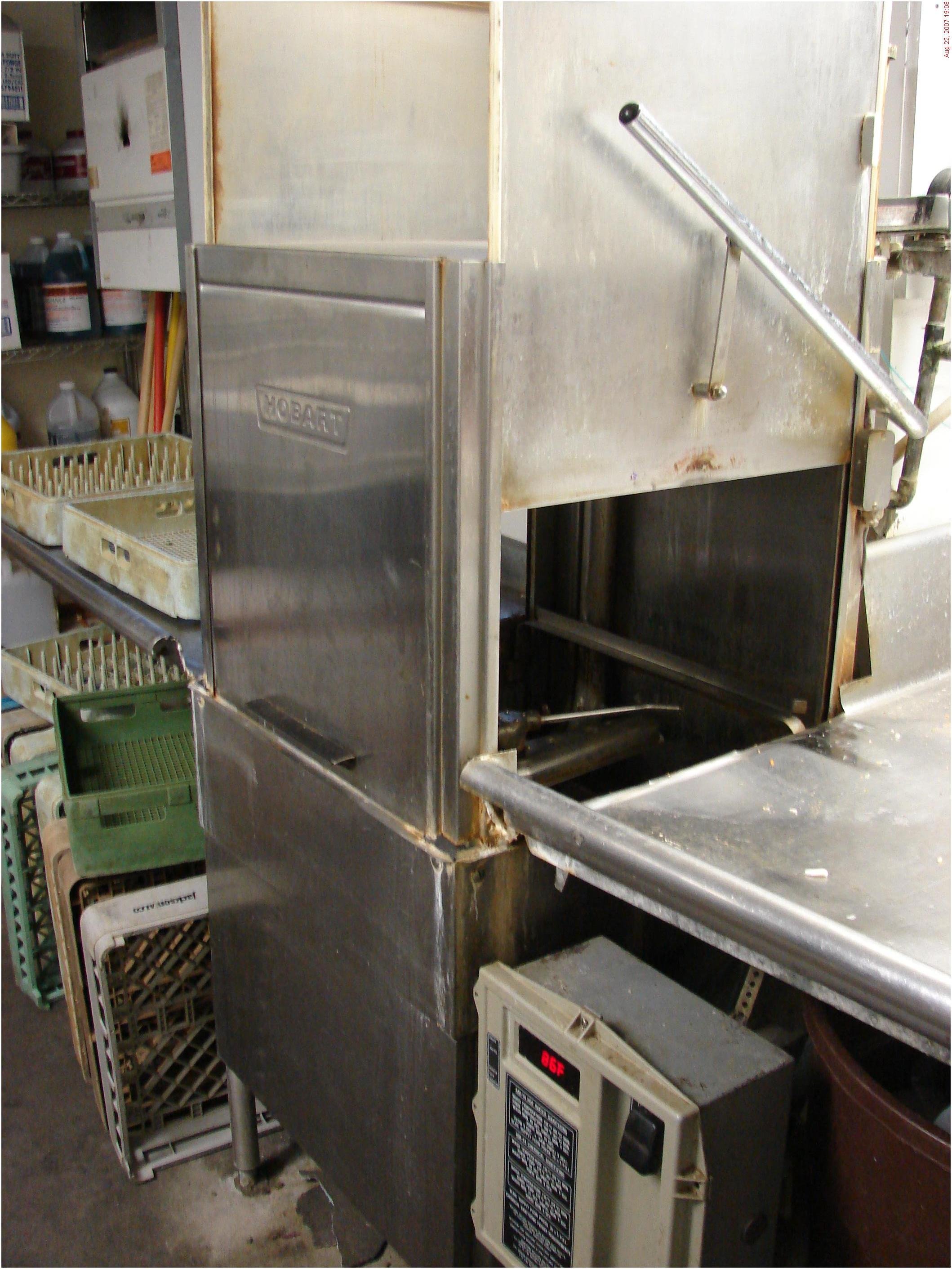
A broken dishwasher shuts down your restaurant faster than a broken oven. For other essential kitchen equipment decisions, see our guides on commercial refrigerators and ice machines. You can cook on a portable burner. You can't wash 300 plates by hand during a Friday dinner service.
I watched this happen at a restaurant in Charleston. Their Hobart door-type machine blew a pump seal at 7pm on a Friday. 120 covers on the books. By 8:30 they were out of clean plates. The owner was in the dish pit with a scrub brush while the GM ran to Restaurant Depot for paper plates. They comped $1,400 in meals that night. The repair cost $900. The lost revenue and comps cost $6,000.
The pump seal that failed? It's a $40 part. They could have replaced it during a preventive maintenance visit. They'd skipped their last two because "the machine was running fine."
Industry Data & Sources:
Energy Star provides efficiency ratings and buying guides for commercial kitchen equipment.
NSF International certifies commercial foodservice equipment for safety and sanitation standards.
High-Temp vs Low-Temp: Quick Comparison
| Feature | High-Temp (180°F) | Low-Temp (Chemical) |
|---|---|---|
| Sanitizing method | 180°F hot water | Chlorine or quat sanitizer |
| Undercounter cost | $4,000-$8,000 | $2,500-$5,000 |
| Door-type cost | $8,000-$15,000 | $5,000-$10,000 |
| Conveyor cost | $15,000-$40,000 | $10,000-$25,000 |
| Booster heater | Required ($1,500-$3,000) | Not required |
| Vent hood | Required ($3,000-$8,000) | Usually not required |
| Energy cost/year | $5,600-$11,200 | $2,000-$4,000 |
| Chemical cost/month | $0 | $50-$150 |
| Glassware clarity | Crystal clear | Slight film |
| Best for | Wine bars, craft cocktail bars | Most restaurants, cafes |
High-Temp vs Low-Temp: The Decision That Determines Everything
Recommended Tool
Shop the largest selection of restaurant equipment at WebstaurantStore.
Free shipping on orders over $99 and price match guarantee.
High-Temp (Hot Water Sanitizing)
A high-temp dishwasher uses 180°F water to sanitize. No chemicals needed for sanitizing. It requires a booster heater to get the water hot enough. The booster heater adds $1,500-$3,000 to the cost and needs a dedicated electrical circuit.
Total cost for a high-temp undercounter unit: $4,000-$8,000. A door-type unit: $8,000-$15,000. A conveyor unit: $15,000-$40,000.
The advantage is no chemical residue on glassware. If you serve wine or craft cocktails, high-temp is the only option. Chemical sanitizer leaves a film that kills head retention on beer and makes wine glasses look cloudy. I've had sommeliers tell me they can taste the difference. I'm not sure I can. But your customers who spend $80 on a bottle of wine? Some of them can.
The disadvantage is energy cost. Heating water to 180°F costs $2-$4 per hour. At 8 hours per day, 350 days per year, that's $5,600-$11,200 per year in energy. Plus the hood and ventilation requirements. A high-temp machine puts out steam and heat. You need a vent hood, which adds $3,000-$8,000 installed.
One more thing about high-temp: the room gets hot. Really hot. I was in a kitchen in Miami in August with a high-temp conveyor running full tilt. The dish area was 105 degrees. The dishwasher quit after 3 weeks. His replacement quit after 2 months. They ended up installing a dedicated AC unit just for the dish area. Another $4,000 they hadn't budgeted for.
Low-Temp (Chemical Sanitizing)
A low-temp dishwasher uses chemical sanitizer (chlorine or quaternary ammonium) at 120-140°F. No booster heater needed. Lower energy cost. No vent hood required in most jurisdictions.
Total cost for a low-temp undercounter unit: $2,500-$5,000. A door-type unit: $5,000-$10,000. A conveyor unit: $10,000-$25,000.
The disadvantage is ongoing chemical cost. Sanitizer runs $50-$150 per month. Plus you need test strips to verify concentration every shift. Health inspectors check this. If your sanitizer concentration is too low, it's a violation.
Glassware will have a slight film with chemical sanitizing. For most restaurants, customers won't notice. For a wine bar or craft cocktail bar, they will.
Here's a trick I learned from a health inspector in Florida: if you go low-temp, use quaternary ammonium (quat) sanitizer instead of chlorine. Chlorine evaporates at 120°F, which is exactly the temperature of your wash water. You're constantly losing sanitizer concentration. Quat is stable at higher temperatures. It costs about 20% more but you'll fail fewer health inspections.
He also told me the most common violation he writes is "no test strips on site." Not "wrong concentration." Just "can't prove you checked." A $15 box of test strips prevents a $200 fine. Keep them visible. Inspector walks in, sees test strips hanging on the wall, checks that box mentally and moves on.
The 3 Types of Machines
Undercounter (Glass Washer)
Fits under a counter. Washes one rack at a time. Cycle time: 2-4 minutes. Capacity: 30-40 racks per hour. This is for bars and small cafes doing under 100 covers per day.
Hobart AM15: $4,000-$6,000. The industry standard for undercounter. Jackson TempStar: $3,000-$5,000. Good alternative with better parts availability in some regions.
Side note on the Hobart AM15: the door latch design changed in 2023. The old latch was metal and lasted forever. The new one is plastic and breaks. I know 3 owners who've replaced theirs. Hobart says it's a "cost optimization." It's a $90 part that now fails every 18 months instead of never. If you can find a used pre-2023 AM15 in good condition, buy it.
Door-Type (Single Rack)
You lift a door, slide in a rack, close the door, and it washes. Cycle time: 60-90 seconds. Capacity: 40-60 racks per hour. This is for restaurants doing 100-250 covers per day.
Hobart CLeN: $8,000-$12,000. The most common door-type machine in American restaurants. Jackson Delta: $6,000-$10,000. Champion UH-200: $7,000-$11,000.
📬 Get More Customers. Get More Profit.
Join 2,400+ restaurant owners getting actionable tips every Friday. One email. One insight. No spam.
A door-type machine needs an operator. Someone has to load racks, run the cycle, and unload. At 60 seconds per cycle, that person can wash about 40 racks per hour while also scraping and sorting. Budget one dishwasher per shift for a door-type machine.
Here's something the equipment dealers won't tell you: Hobart parts are everywhere. Every repair tech in America knows how to fix a Hobart. Jackson and Champion parts can take 3-5 days to arrive depending on where you are. I'd rather have a Jackson machine with a local tech who stocks parts than a Hobart with a tech who's 2 hours away. Ask your dealer "if this breaks on a Friday night, when can you have it running again?" Not "what's the warranty?" The warranty doesn't wash dishes.
Conveyor (Rack Conveyor)
Racks go in one end and come out the other. Continuous operation. Capacity: 100-250 racks per hour. This is for restaurants doing 250+ covers per day, hotels, and institutional kitchens.
Hobart CLPS66e: $18,000-$30,000. Jackson Avenger: $15,000-$25,000. Champion UH-200B: $16,000-$28,000.
A conveyor machine needs 2 people: one loading dirty dishes, one catching clean dishes. But it processes 3-4 times the volume of a door-type machine. If you're doing 300 covers on a Saturday night, a door-type machine creates a bottleneck. Servers wait for glassware. The bar runs out of clean glasses. A conveyor machine eliminates that bottleneck.
But. Conveyors are finicky. The belt tension has to be right. The rinse arms have to be aligned. The chemical dispensers need calibration. When they work, they're incredible. When they don't, you need a tech. You can't fix a conveyor yourself the way you can fix a door-type machine. Budget $2,000-$4,000 per year for conveyor maintenance. If that number scares you, buy a door-type.
Installation Costs Nobody Tells You About
Electrical: A door-type machine needs a 208-240V, 3-phase circuit. If your building doesn't have 3-phase power, you need a phase converter ($2,000-$5,000) or a single-phase machine (fewer options, same price).
Plumbing: You need hot water supply, cold water supply (for the condenser on some models), and a drain. The drain needs an air gap to prevent backflow. Plumbing installation runs $1,000-$3,000.
Ventilation: High-temp machines need a vent hood. Low-temp machines usually don't. Check your local code. Some jurisdictions require ventilation for all commercial dishwashers regardless of type.
Water treatment: Hard water destroys dishwashers. Scale buildup on heating elements reduces efficiency and causes premature failure. A water softener costs $1,000-$3,000 installed. It extends your dishwasher's life by 3-5 years and reduces detergent usage by 30%.
I didn't install a water softener at my first restaurant. The heating element scaled up in 18 months and the machine stopped hitting 180°F. Health department gave us 7 days to fix it. The element replacement was $400. The water softener I should have bought would have been $1,200. I paid $400 plus a violation plus the stress. Just install the softener.
Actually, let me add one more thing about water softeners. The salt tank needs refilling. Someone has to do it. If nobody's job description includes "check the water softener salt," it won't get done. I've seen restaurants with $3,000 water softeners that weren't softening anything because the salt tank was empty for 6 months. Put it on a checklist. Make it someone's weekly task.
Maintenance That Prevents Breakdowns
Every day: Clean the scrap basket and spray arms. Remove and clean the wash arms. Clogged spray arms are the number one cause of dirty dishes. Delime the machine if you have hard water.
Every week: Check the rinse temperature. High-temp machines need 180°F minimum at the dish. Low-temp machines need 120-140°F. Check sanitizer concentration with test strips. Clean the detergent and rinse aid lines.
Every month: Descale the heating elements and interior. Check door gaskets for leaks. Clean the float switch that controls water level. A stuck float switch causes the machine to overflow or not fill.
Every 6 months: Have a tech service the machine. They'll check the pump, heating elements, thermostats, and chemical dispensers. Cost: $200-$400 per visit.
The Charleston restaurant I mentioned earlier? After the $6,000 disaster, they put a maintenance checklist on the wall above the dishwasher. Laminated. Sharpie on a string. Dishwasher initials each task every shift. They haven't had a breakdown in 3 years. The checklist cost $12 to print and laminate.
What to Buy Based on Your Volume
Under 100 covers per day: Low-temp undercounter. Jackson TempStar or Hobart AM15. Budget $3,000-$6,000.
100-250 covers per day: Low-temp door-type. Hobart CLeN or Jackson Delta. Budget $6,000-$12,000. Add a booster heater and go high-temp if you serve wine or craft cocktails.
250+ covers per day: High-temp conveyor. Hobart CLPS66e or Jackson Avenger. Budget $18,000-$30,000 plus $5,000-$10,000 for installation.
Bar only: High-temp undercounter glass washer. Budget $4,000-$6,000. Chemical sanitizer ruins glassware for beer and wine. Don't cheap out here.
One exception to the volume rules: if you do banquet service where 200 people all eat at the same time, you need a conveyor even if your daily cover count is only 150. A door-type machine can handle 200 covers spread over 4 hours. It can't handle 200 covers in 45 minutes. Think about your peak, not your average.
If you take one thing from this guide: buy the brand your local tech stocks parts for. Everything else is secondary.
For the complete equipment picture, check our essential restaurant equipment list with real costs for every piece of gear you'll need.
Disclosure: Some links in this article are affiliate links. We may earn a commission if you make a purchase, at no additional cost to you. We only recommend products we've researched and believe will help restaurant owners.
Recommended Tool
Equip your restaurant with WebstaurantStore.
The #1 supplier for restaurant equipment and supplies.